Cannabadiol For Epilepsy

Cannabadiol, an extract of marijuana different from the THC ingredient in which most forms of hemp used as a recreational drug are enriched, has been in clinical trials for several years. This is the first good quality, large trial of the drug in the US to be published.

Note that most persons purchasing hemp oil for its CBD content are using between 1/100th and 1/10th the dosage used in this study (20 mg/kg would be 1400 mg in a 70 kg adult, and see, for example, online published dosages for CBD oil here). So most "medicinal" users of marijuana who are using the medication for seizure prevention are not likely to be getting a therapeutic dosage of CBD in their herbal intake.

========================================================

ABSTRACT

Trial of Cannabidiol for Drug-Resistant Seizures in the Dravet Syndrome

Orrin Devinsky, M.D., J. Helen Cross, Ph.D., F.R.C.P.C.H., Linda Laux, M.D., Eric Marsh, M.D., Ian Miller, M.D., Rima Nabbout, M.D., Ingrid E. Scheffer, M.B., B.S., Ph.D., Elizabeth A. Thiele, M.D., Ph.D., and Stephen Wright, M.D., for the Cannabidiol in Dravet Syndrome Study Group*

N Engl J Med 2017; 376:2011-20

20 May 25, 2017

DOI: 10.1056/NEJMoa1611618

BACKGROUND

The Dravet syndrome is a complex childhood epilepsy disorder that is associated with drug-resistant seizures and a high mortality rate. We studied cannabidiol for the treatment of drug-resistant seizures in the Dravet syndrome.

METHODS

In this double-blind, placebo-controlled trial, we randomly assigned 120 children and young adults with the Dravet syndrome and drug-resistant seizures to receive either cannabidiol oral solution at a dose of 20 mg per kilogram of body weight per day or placebo, in addition to standard antiepileptic treatment. The primary end point was the change in convulsive-seizure frequency over a 14-week treatment period, as compared with a 4-week baseline period.

RESULTS

The median frequency of convulsive seizures per month decreased from 12.4 to 5.9 with cannabidiol, as compared with a decrease from 14.9 to 14.1 with placebo (adjusted median difference between the cannabidiol group and the placebo group in change in seizure frequency, −22.8 percentage points; 95% confidence interval [CI], −41.1 to −5.4; P=0.01). The percentage of patients who had at least a 50% reduction in convulsive-seizure frequency was 43% with cannabidiol and 27% with placebo (odds ratio, 2.00; 95% CI, 0.93 to 4.30; P=0.08). The patient’s overall condition improved by at least one category on the seven-category Caregiver Global Impression of Change scale in 62% of the cannabidiol group as compared with 34% of the placebo group (P=0.02). The frequency of total seizures of all types was significantly reduced with cannabidiol (P=0.03), but there was no significant reduction in nonconvulsive seizures. The percentage of patients who became seizure-free was 5% with cannabidiol and 0% with placebo (P=0.08). Adverse events that occurred more frequently in the cannabidiol group than in the placebo group included diarrhea, vomiting, fatigue, pyrexia, somnolence, and abnormal results on liver-function tests. There were more withdrawals from the trial in the cannabidiol group.

CONCLUSIONS

Among patients with the Dravet syndrome, cannabidiol resulted in a greater reduction in convulsive-seizure frequency than placebo and was associated with higher rates of adverse events. (Funded by GW Pharmaceuticals; ClinicalTrials.gov number, NCT02091375.)

Centrist

I am a political centrist. In today's polarized political climate, this means that almost all the politically opinionated people I speak with are opposed to centrism. We seem unpopular everywhere.

Chronic traumatic encephalopathy as backstory?

So the deceased's lawyer wants the brain autopsy results. Why? So that the NFL might be held liable for the brevity of a life characterized by violence?

Here.

Weekend bioRxiv Preprint Review: Sex Differences in the Brain

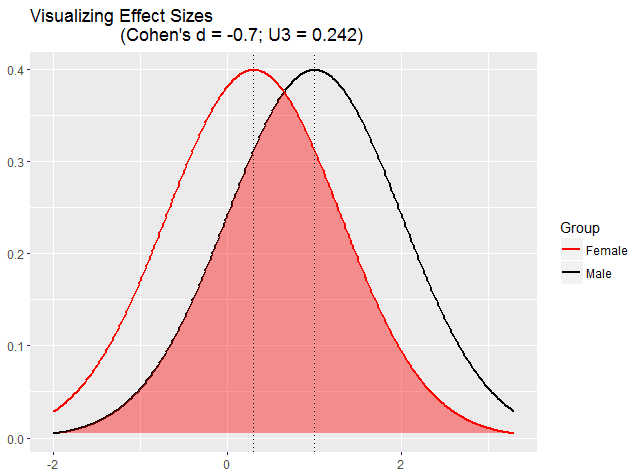
The preprint of a summary of measures of brains in 5,216 donors to the UK's Biobank program was released on bioRxiv this past week. As a summary, they found that male brains were slightly larger in most structures, on the average, than female brains. This should not be surprising given that human males are on average slightly larger than human females. After controlling for average brain volume, though, there was still frequently a 0.7 to 0.8 Cohen's D value effect size of biological gender on many brain measures, with male brains usually larger on such measures, except, as has been noted before, female brains had a slightly thicker cortex and a larger corpus callosum.

The chart above is to show the degree of overlap for such differences in an ideal normal distribution case. The charts below reflect the actual current study under review's data. It's important to note that such size differences do not generally influence social aspects of gender. For example, persons who identify themselves more with their opposite biological sex (the trans-gendered) have scans that reflect on average measures that reflect their biological sex, not their psycho-social preference for gender. A further point: variances between individuals were larger than variance between men and women, reinforcing that we need to understand a mutiplicity of each individual's own personal qualities in order to better understand them and their abilities, much more than we need to rely on a single fact such as gender. As the paper says, "Overall, for every brain measure that showed even large sex differences, there was always overlap between males and females (p. 8)."

============================================

ABSTRACT

Sex differences in the adult human brain: Evidence from 5,216 UK Biobank participants

Stuart J. Ritchie1,2*, Simon R. Cox1,2, Xueyi Shen3, Michael V. Lombardo4,5, Lianne M. Reus6, Clara Alloza3, Matthew A. Harris2,3, Helen L. Alderson7, Stuart Hunter8, Emma Neilson3, David C. M. Liewald1,2, Bonnie Auyeung1, Heather C. Whalley3, Stephen M. Lawrie3, Catharine R. Gale2,9, Mark E. Bastin2,10,11, Andrew M. McIntosh2,3, Ian J. Deary1,2

bioRxiv preprint first posted online Apr. 4, 2017; doi: http://dx.doi.org/10.1101/123729.

SEX DIFFERENCES IN THE HUMAN BRAIN

Summary

Sex differences in human brain structure and function are of substantial scientific interest because of sex-differential susceptibility to psychiatric disorders [1,2,3] and because of the potential to explain sex differences in psychological traits [4]. Males are known to have larger brain volumes, though the patterns of differences across brain subregions have typically only been examined in small, inconsistent studies [5]. In addition, despite common findings of greater male variability in traits like intelligence [6], personality [7], and physical performance [8], variance differences in the brain have received little attention. Here we report the largest single-sample study of structural and functional sex differences in the human brain to date (2,750 female and 2,466 male participants aged 44-77 years). Males had higher cortical and sub-cortical volumes, cortical surface areas, and white matter diffusion directionality; females had thicker cortices and higher white matter tract complexity. Considerable overlap between the distributions for males and females was common, and subregional differences were smaller after accounting for global differences. There was generally greater male variance across structural measures. The modestly higher male score on two cognitive tests was partly mediated via structural differences. Functional connectome organization showed stronger connectivity for males in unimodal sensorimotor cortices, and stronger connectivity for females in the default mode network. This large-scale characterisation of neurobiological sex differences provides a foundation for attempts to understand the causes of sex differences in brain structure and function, and their associated psychological and psychiatric consequences.

New Evidence for Early Formation of Long-Term Memory

In the study abstract below, Kitamura and others show that long-term memory traces in the outer cerebral cortex of the mouse are laid down early in the experience to be remembered. Prior to this study the prevailing opinion was that neuronal traces for short-term memories are initially created only in the hippocampus and transferred later to long term cortex. The study below shows that initial weak traces of long term memory are created simultaneously with the strong short term memory traces in the hippocampal short term memory region, and that, over a couple weeks, the cortical area traces become stronger and more active and the corresponding hippocampal areas fade in their activity.

This suggests that prior theories were too simplistic, perhaps because they tended to model memory after human information storage, such as writing or memory disk, where information is generally laid down once and remains the same strength thereafter unless erased. Modeling the brain after our technology metaphors can be misleading.

==============================================================

ABSTRACT

Engrams and circuits crucial for systems consolidation of a memory

Takashi Kitamura1,*, Sachie K. Ogawa1,*, Dheeraj S. Roy1,*, Teruhiro Okuyama1, Mark D. Morrissey1, Lillian M. Smith1, Roger L. Redondo1,2,†, Susumu Tonegawa1,2,‡

Science 07 Apr 2017

Vol. 356, Issue 6333, pp. 73-78

DOI: 10.1126/science.aam6808


The network of memory consolidation

Memories are thought to be formed in the hippocampus and later moved to the neocortex for long-term storage. However, little is known about the mechanisms that underlie the formation and maturation of neocortical memories and their interaction with the hippocampal network. Kitamura et al. discovered that at the onset of learning, neurons for contextual fear memory are quickly produced in the prefrontal cortex. This process depends on the activity of afferents from both the hippocampus and the amygdala. Over time, the prefrontal neurons consolidate their role in memory expression. In contrast, the hippocampal neurons slowly lose this function.

Episodic memories initially require rapid synaptic plasticity within the hippocampus for their formation and are gradually consolidated in neocortical networks for permanent storage. However, the engrams and circuits that support neocortical memory consolidation have thus far been unknown. We found that neocortical prefrontal memory engram cells, which are critical for remote contextual fear memory, were rapidly generated during initial learning through inputs from both the hippocampal–entorhinal cortex network and the basolateral amygdala. After their generation, the prefrontal engram cells, with support from hippocampal memory engram cells, became functionally mature with time. Whereas hippocampal engram cells gradually became silent with time, engram cells in the basolateral amygdala, which were necessary for fear memory, were maintained. Our data provide new insights into the functional reorganization of engrams and circuits underlying systems consolidation of memory.

An amazingly shallow review of travels in Hawaii in the NYT this month.

The NYT March 2017 travel writer's perspective picture:

What we photographed during a similary awesome (to us) hike in 2016. Note the focus on the lava and the scenery, not the tourists themselves:

Yet another travel writer fails to surpass Mark Twain's Letters from Hawaii. This new travelogue could be seen as a sad reminder of how we cannot easily escape our issues if we bring the problematic attitudes with us. I can but quote others on this kind of attitude:

I just want people to take a step back, take a deep breath and actually look at something with a different perspective. But most people will never do that.
--Brian McKnight

"Though we travel the world over to find the beautiful, we must carry it within us or we will find it not."
--Ralph Waldo Emerson

The NYT travel review reviewed above can be found

Here.

On Probabilities and Confirmation Holism

According to a theory of knowledge called confirmation holism, we believe facts on the basis of their being part of a larger body of knowledge that we believe in total. For example, my belief in Sweden is a part of my knowledge of geography and history as a whole. I would have to doubt much of what I know of the nations and history of the world to disbelieve in Sweden.

One problem that's been advanced against such confirmation holism is the idea that we must have to assign each fact we know a probability, and then, by the laws of probability, don't we calculate the odds of our entirety of holistic conjunction of facts just as the product of the individual probabilities? For example, if we believe each fact of a 500-fact conjunction with p = 0.95, does this make our degree of belief in the 500-conjunct equal to (0.95)^500, or just 0.0000000000073?

But, of course, we DON'T calculate the probabilities of the whole this way! The multiplication rule for the conjunct of two probabilities assumes that those probabilities are independent! . And, in the case of confirmation holism, that is exactly what we would deny.

Lala

You can tell the hurricane is missing the island because the wind chimes are still there, instead of ripped free.