Design controversies again, in biology this time.

Bloggers and others pressured PlosOne to retract an above-average-quality biomechanics paper which suggested in three different phrases that the human hand was designed by a creator.

One wonders if these bloggers would have forced Isaac Newton's publisher to retract his Principia (1729) which says in its General Scholium:

The six primary Planets are revolv’d about the Sun, in circles concentric with the Sun, and with motions directed towards the same parts and almost in the same plane. Ten Moons are revolv’d about the Earth, Jupiter and Saturn, in circles concentric with them, with the same direction of motion, and nearly in the planes of the orbits of those Planets. But it is not to be conceived that mere mechanical causes could give birth to so many regular motions: since the Comets range over all parts of the heavens, in very eccentric orbits. For by that kind of motion they pass easily through the orbs of the Planets, and with great rapidity; and in their aphelions, where they move the slowest, and are detain’d the longest, they recede to the greatest distances from each other, and thence suffer the least disturbance from their mutual attractions. This most beautiful System of the Sun, Planets, and Comets, could only proceed from the counsel and dominion of an intelligent and powerful being.

A good reader should be able to bracket statements that they disagree with and still benefit from new information. Censorship of such minor comments about a personified "Nature" or "Creator," which merely show the writer doing some wider reflection about the investigation and are not specifically religious at all, is out of place in an open scientific forum. This sort of anti-intelligent design witch hunting has got out of hand.

Paukaa Early Spring Tea


Hand rolled this weekend: Camellia sinesis tea, done 金萱 (light oolong) style. Plucked from the two four-year-old small trees in the back yard. About 20 g per bag.

Congenital Zika virus, like rubella virus, infects fetal cortical progenitor cells.

Many viral infections, especially rubella, can affect the developing nervous system. Perhaps one way in which they do so is to cross the placenta from the infected mother to the infant, where they damage the developing cortical layers of the fetal brain's cerebrum. The following recent studies support this hypothesis.

ABSTRACT

-------------------------------------------------

Immunolocalization and Distribution of Rubella Antigen in Fatal Congenital Rubella Syndrome

Mihaela Lazar, Ludmila Perelygina, Roosecelis Martines, Patricia Greer, Christopher D. Paddock, Gheorghe Peltecu, Emilia Lupulescu, Joseph Icenogle, and Sherif R. Zakib

An estimated 100,000 cases of congenital rubella syndrome (CRS) occur worldwide each year. The reported mortality rate for infants with CRS is up to 33%. The cellular mechanisms responsible for the multiple congenital defects in CRS are presently unknown. Here we identify cell types positive for rubella virus (RV) in CRS infants.

Methods

Cells and organs involved in RV replication were identified in paraffin-embedded autopsy tissues from three fatal case-patients by histopathologic examination and immunohistochemical (IHC) staining using a rabbit polyclonal RV antibody. Normal rabbit antisera and RV antisera preabsorbed with highly purified RV served as negative controls.

Results

RV antigen was found in interstitial fibroblasts in the heart, adventitial fibroblasts of large blood vessels, alveolar macrophages, progenitor cells of the outer granular layer of the brain, and in capillary endothelium and basal plate in the placenta. The antibody specificity was verified by IHC staining of multiple tissue sections from other infectious disease cases. RV infection of each cell type is consistent with abnormalities which have been identified in patients with CRS, in the heart, large blood vessels, and brain. Antigen distribution was consistent with inflammatory response to vascular injury and systemic spread of RV.

Conclusions

The identification of RV positive cell types in CRS is important to better understand the pathology and pathogenesis of CRS.


ABSTRACT

-------------------------------------------------

Zika Virus Infects Human Cortical Neural Progenitors and Attenuates Their Growth

Hengli Tang11correspondenceemail, Christy Hammack11, Sarah C. Ogden11, Zhexing Wen11, Xuyu Qian11, Yujing Li, Bing Yao, Jaehoon Shin, Feiran Zhang, Emily M. Lee, Kimberly M. Christian, Ruth A. Didier, Peng Jin, Hongjun Songcorrespondenceemail, Guo-li Ming

Publication stage: In Press Corrected Proof

DOI: http://dx.doi.org/10.1016/j.stem.2016.02.016

Summary

The suspected link between infection by Zika virus (ZIKV), a re-emerging flavivirus, and microcephaly is an urgent global health concern. The direct target cells of ZIKV in the developing human fetus are not clear. Here we show that a strain of the ZIKV, MR766, serially passaged in monkey and mosquito cells efficiently infects human neural progenitor cells (hNPCs) derived from induced pluripotent stem cells. Infected hNPCs further release infectious ZIKV particles. Importantly, ZIKV infection increases cell death and dysregulates cell-cycle progression, resulting in attenuated hNPC growth. Global gene expression analysis of infected hNPCs reveals transcriptional dysregulation, notably of cell-cycle-related pathways. Our results identify hNPCs as a direct ZIKV target. In addition, we establish a tractable experimental model system to investigate the impact and mechanism of ZIKV on human brain development and provide a platform to screen therapeutic compounds.

Received: February 24, 2016; Received in revised form: February 28, 2016; Accepted: February 29, 2016; Published: March 4, 2016

Little Fire Ants

Small, but their bites are painful. Here is a recipe for ant sterilization, safe for vertebrates.

Tango Based Sticky Sprayable LFA Bait


INGREDIENTS:

• 3 cups warm water

• 2 cups corn oil or other vegetable oil

• 4 tablespoons Tango® (a brand of methoprene approved for edible plant use in Hawaii-- see here for information)

• 1 tablespoon xanthan gum

• 2 teaspoons smooth peanut butter


Equipment needed:

• Large mixing bowl (at least 1/2 gallon capacity)

• Cup measure

• Tablespoon measure

• A whisk or similar device for mixing. We do this with a kitchen whisk modified so it can be fitted into the drill chuck. A paint mixer also works well.

MIXING PROCEDURE:

Combine the Tango® and water in alarge mixing bowl. Start mixing andvery slowly add the xanthan gum. It can be difficult to mix the xanthan so be patient and add it very slowly and run the mixer at the highest speed safely possible. The xanthan gum allows the water and the oil to be mixed without separating at a later time.

Continue to mix until everything is evenly combined. It should look like a thick sticky whitish goop (mixing stage 1).

Once completely mixed, pour the oil into the bowl and add the peanut butter. At this point, the oil will sit on top of the water/xanthan mixture(mixing stage 2).

Continue to mix until everything is combined. The bait should now have the same consistency as mayonnaise(mixing stage 3).


Aerobic fitness in midlife correlates with less brain atrophy in late life.

This study supports the generalization to humans of several prior animal studies showing that exercise promotes neurotrophic factor production, which in turn tends to inhibit net brain cell loss.

Midlife exercise blood pressure, heart rate, and fitness relate to brain volume 2 decades later

  1. Sudha Seshadri, MD
  1. Published online before print February 10, 2016

ABSTRACT

Objective: To determine whether poor cardiovascular (CV) fitness and exaggerated exercise blood pressure (BP) and heart rate (HR) were associated with worse brain morphology in later life.
Methods: Framingham Offspring participants (n = 1,094, 53.9% female) free from dementia and CV disease (CVD) underwent an exercise treadmill test at a mean age of 40 ± 9 years. A second treadmill test and MRI scans of the brain were administered 2 decades later at mean age of 58 ± 8 years.
Results: Poor CV fitness and greater diastolic BP and HR response to exercise at baseline were associated with a smaller total cerebral brain volume (TCBV) almost 2 decades later (all p < 0.05) in multivariable adjusted models; the effect of 1 SD lower fitness was equivalent to approximately 1 additional year of brain aging in individuals free of CVD. In participants with prehypertension or hypertension at baseline, exercise systolic BP was also associated with smaller TCBV (p < 0.05).
Conclusion: Our results suggest that lower CV fitness and exaggerated exercise BP and HR responses in middle-aged adults are associated with smaller brain volume nearly 2 decades later. Promotion of midlife CV fitness may be an important step towards ensuring healthy brain aging.

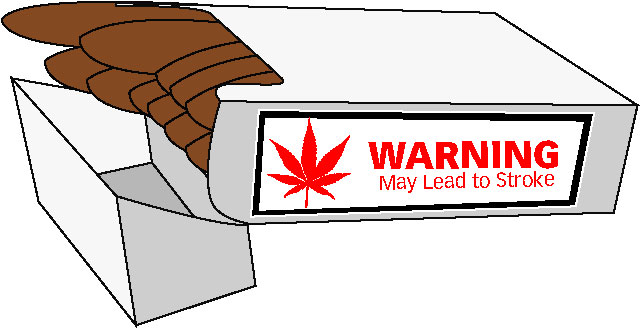
New study: Recreational marijuana use increases risk of stroke by 17%.

Smoking, whether tobacco or marijuana, seems to be bad for vascular health, but perhaps for individually different pharmacological reasons.

-----------------------

ABSTRACT

Recreational marijuana Use and acute ischemic stroke: A population-based analysis of hospitalized patients in the United States

Rumalla, Kavelin et al.

Journal of the Neurological Sciences , in press, 2016.

Recreational marijuana Use and acute ischemic stroke: A population-based analysis of hospitalized patients in the United States

Kavelin Rumalla, Adithi Y. Reddy, Manoj K. Mittal

Article has an altmetric score of 4

DOI: http://dx.doi.org/10.1016/j.jns.2016.01.066

Highlights

•Marijuana use is most common in young, male, African American and Medicaid patients.

•The incidence of AIS is higher in marijuana users compared to non-marijuana users.

•Risk of marijuana-associated AIS increases with concurrent use of tobacco ± cocaine.

•Marijuana use increases the likelihood of AIS, adjusting for stroke risk factors.

•Marijuana use predicts symptomatic cerebral vasospasm, a proposed mechanism of AIS.

Background

Recreational marijuana use is considered to have few adverse effects. However, recent evidence has suggested that it precipitates cardiovascular and cerebrovascular events. Here, we investigated the relationship between marijuana use and hospitalization for acute ischemic stroke (AIS).

Methods

The Nationwide Inpatient Sample was queried from 2004 to 2011 for all patients (age 15–54) with a primary diagnosis of AIS. The incidence of AIS hospitalization in marijuana users and non-marijuana users was determined. We utilized multivariable logistic regression analyses to study the independent association between marijuana use and AIS.

Results

Overall, the incidence of AIS was significantly greater among marijuana users compared to non-users (Relative Risk [RR]: 1.13, 95% CI: 1.11–1.15, P < 0.0001) and had the greatest difference in the 25–34 age group (RR: 2.26, 95% CI: 2.13–2.38, P < 0.0001). Marijuana use was more prevalent among younger patients, males, African Americans, and Medicaid enrollees (P < 0.0001). Marijuana users were more likely to use other illicit substances but had less overall medical comorbidity. Marijuana (Odds Ratio[OR]: 1.17, 95% CI: 1.15–1.20), tobacco (OR: 1.76, 95% CI: 1.74–1.77), cocaine (OR: 1.32, 95% CI: 1.30–1.34), and amphetamine (OR: 2.21, 95% CI: 2.12–2.30) usage were found to increase the likelihood of AIS (all P < 0.0001).

Conclusion

Among younger adults, recreational marijuana use is independently associated with 17% increased likelihood of AIS hospitalization.

On the Vagueness of Species, part 3: On Human Nature

In the reboot movie series of Planet of the Apes, Dawn of Planet of the Apes, superchimp Koba has already unfeelingly killed other superchimps in his quest for power, and when he fails to also kill hero superchimp Caesar, Caesar kills him after declaring him to be a nonchimp and so outside of their society's protection. It's that kind of declaration-- about what we say is human and deserving of human rights--that worries molecular biologist Dwayne Holmes here.

Of course, the movie is using the superchimps-as-apes-as-human-as-we-are trope to examine, among other things, the ethics of what it is to be human within a warring and tribalistic society. I think that the above movie's ethical questions and answers adoitly fit Holmes' concerns that many may tend to define human nature to exclude our fellowman because he fails to fit a standard for what we consider human. For example, see this article, where the humanity of the psychopath is questioned.

I see this exclusionary definition of human nature as misguided. The psychopath may have a deficit in limbic structure and function, but this fails to exclude them from the rough set that is the human species. To exclude the psychopath we would need even more to exclude the person with Down syndrome as well--after all, they have deficits of the brain and a clear genetic change as cause. And that would be unethical, even to the minds of those who exclude the psychopath.

The human species, considered as a rough set, can include the psychopath in our vague boundary of persons who are definitely human but not human in every characteristic: they are humans who are not clearly within the positive region of the set of humans, but are certainly not excluded as being in the negative region either.

We don't have to accept Caesar's declaration that psychopathic Koba is not ape, and neither should we accept Holmes' declaration that there is no human nature to declare. Human nature is real, even if it's a vague thing to be human, sometimes. To love our neighbors as ourselves means, among other things, that we give ourselves the opportunity to see them as the fellow humans that they are.

Lala

You can tell the hurricane is missing the island because the wind chimes are still there, instead of ripped free.